Colorado Plug-In Solar Law (HB26-1007): The 1,920-Watt Limit Explained
Colorado's HB26-1007 allows portable solar devices up to 1,920 W, with a 391-watt exemption, possible utility notice and most device rules from January 1, 2027.
Some links are affiliate links: if you buy through them we earn a small commission at no extra cost to you. It does not change our recommendations.

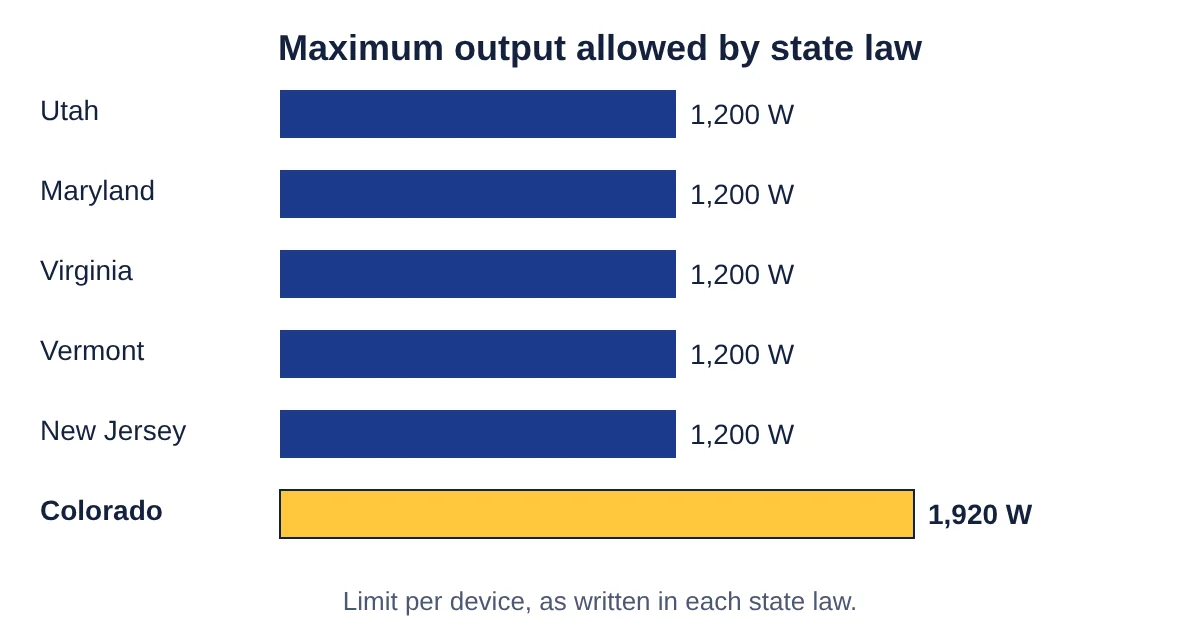
Colorado’s HB26-1007 allows a portable-scale solar generation device of up to 1,920 watts to the electric grid. That is higher than the 1,200-watt limit in Utah, Maryland and Virginia. The law was approved on May 7, 2026, and most of its device rules apply from January 1, 2027.
What the definition says
The statute, C.R.S. § 40-2-140, defines a portable-scale solar generation device as one that delivers no more than 1,920 watts to the electric grid. The device must be labeled and listed by a nationally recognized testing laboratory. The law refers to that kind of laboratory listing rather than to one specific UL standard.
What the higher limit changes
Under Colorado’s definition, a device rated above 1,200 W can qualify, up to 1,920 W. That same device would not fit the 1,200-watt limit in Utah, Maryland or Virginia. If you plan to move, or to buy from a seller in another state, check the limit where the system will be installed before you order.
The utility’s rights and limits
A utility may require a customer to notify it, indicating the presence and size of the device in kilowatts. It may not require the customer to get approval before installing or using the device, and it may not charge a fee related to the device. It also cannot require extra controls or equipment.
This is the main difference from Utah. Utah’s law sets no notice requirement, while Colorado lets the utility ask for one. For the state comparison, see do you have to tell your utility about plug-in solar.
The 391-watt exemption
Devices rated at 391 watts or less are exempt from the solar installation requirements in § 40-2-128. They are also exempt from building safety or product-listing provisions that would require changing the building’s wiring.
The outage feature
The device must include a feature that prevents it from energizing the electric grid during a power outage. Utah’s law contains the same kind of requirement. For what that means in practice, read does plug-in solar work during a power outage.
When the rules start
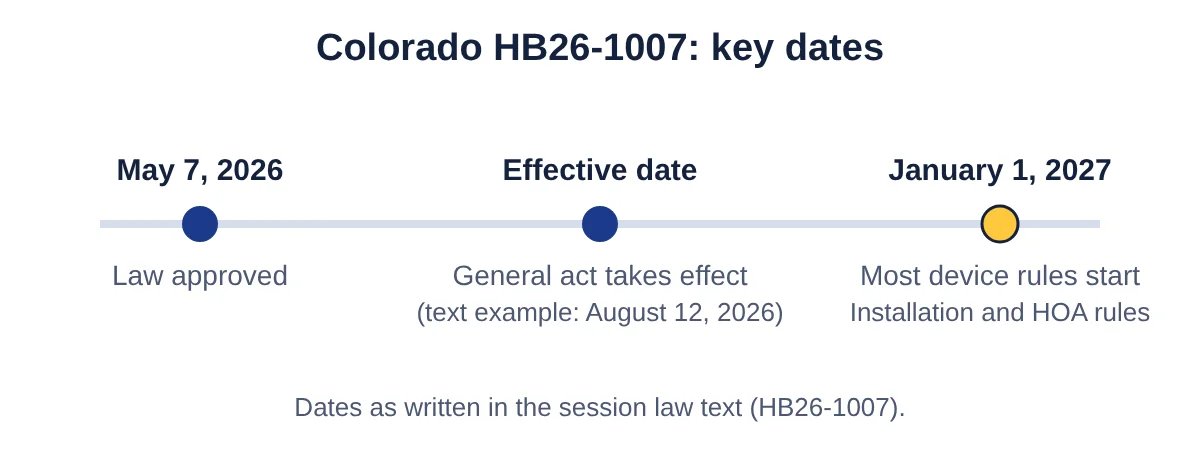
- May 7, 2026: the law is approved.
- The general effective date: the act takes effect at 12:01 a.m. on the day after the 90-day period that follows adjournment. The text gives August 12, 2026 as its example. If a referendum petition is filed, the act takes effect only if voters approve it at the November 2026 general election.
- January 1, 2027: most device rules apply from this date, including rules on installation and use and on covenant and HOA restrictions.
- December 31, 2026: the Public Utilities Commission must revise its existing rules by this date.
Before you buy
- Check the listing. Ask the seller for the testing laboratory’s listing of the exact model.
- Check the rating. A device above 1,920 W does not meet the Colorado definition.
- Ask your utility. Find out whether it requires notice and what form it uses.
- Check the start date. Most device rules apply from January 1, 2027.
Common mistakes
- Using the 1,200-watt figure from other states for Colorado. Colorado’s limit is 1,920 W.
- Assuming the August example date applies to everything. Most device rules start January 1, 2027.
- Assuming no notice is needed in Colorado. A utility may require notice of presence and size.
For the general picture, read is balcony solar legal in your state. For the state with the earliest law, see Utah’s law, and for a state with a notice step, see Maryland’s law.
Frequently asked questions
Why does Colorado allow more than 1,200 watts?
Colorado's HB26-1007 sets a higher limit of 1,920 watts to the electric grid for a portable-scale solar generation device. Utah, Maryland and Virginia set 1,200 watts.
Do I have to tell my utility in Colorado?
Possibly. The utility may require you to notify it of the device's presence and size in kilowatts. It cannot require approval or charge a fee for the device.
When can I start using plug-in solar in Colorado?
The general act takes effect the day after a 90-day period following adjournment, unless a referendum petition is filed. Most device rules apply from January 1, 2027.
How is Colorado different from Utah?
Colorado allows 1,920 W instead of 1,200 W, lets the utility require notice of the device's presence and size, and sets most device rules from January 1, 2027. Utah's law sets no notice requirement to the utility.
Does the 391-watt exemption apply to my system?
It applies to devices rated at 391 watts or less. Those devices are exempt from the solar installation requirements in § 40-2-128 and from listing or safety provisions that would require changing the building's wiring.