Balcony Solar Mounts: Railing, Ground and Wall Options
Compare railing, floor, wall and fence mounts for balcony solar. Check your lease, the rated load and the angle before you choose one.
Some links are affiliate links: if you buy through them we earn a small commission at no extra cost to you. It does not change our recommendations.
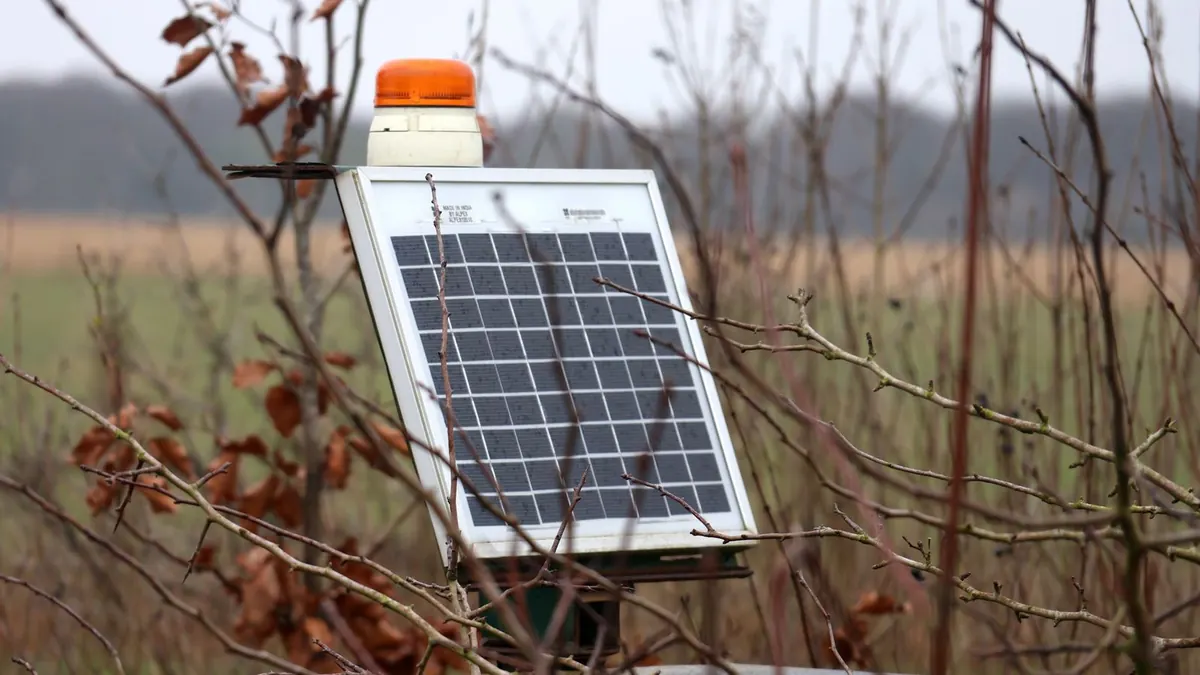
A balcony solar mount holds the panel in place and sets its angle. The main options are railing mounts, floor or ground stands, and wall or fence mounts. Before you buy, check your lease and HOA rules, the mount’s rated load and wind rating, and the angle the panel will face. Checked November 12, 2026.
Know the rules first
Before you drill, clamp or hang anything, read your lease and your HOA’s rules on balcony changes. Many leases and HOAs set their own conditions for anything attached to a railing or wall.
State law can add a notice step. New Jersey’s S2368 requires a tenant to give the landlord written notice at least 14 days before placing or using the device. Vermont’s Act 149 sets a 10-day notice period for tenants, and if the landlord does not respond within that time, the tenant may go ahead. Whatever your state, a written note to the landlord protects you both.
Railing mounts
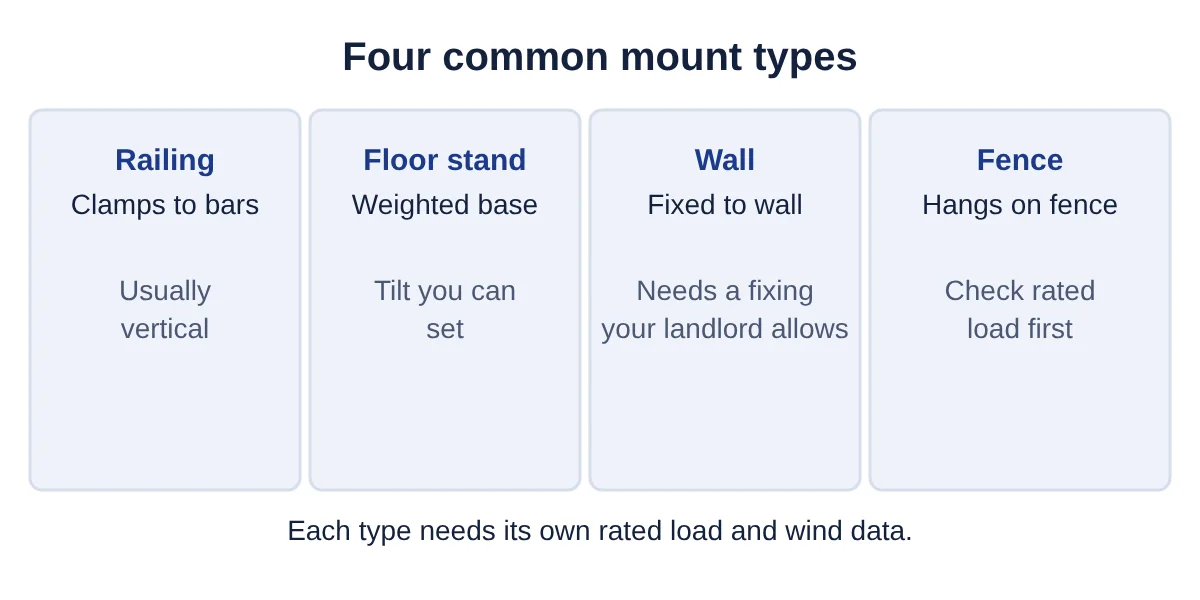
Railing mounts clamp onto the bars or top rail of a balcony. They are the most common choice for renters because they do not need screws into the building. They usually hold a panel in a vertical position.
Before you buy, check the size range of the clamp against your railing’s thickness and shape. Confirm the mount’s rated load and wind rating in writing. Do not hang a panel from a railing that is not designed to carry it.
Floor and ground stands
A floor stand uses a weighted base or a frame that sits on the balcony floor. Most stands let you set the tilt, which is the main advantage over a railing mount. A stand can also be moved if you move house.
Check the base weight and the stand’s rated load. A stand that lifts a panel high in the wind needs a base sized for that load, and the maker should state the figure.
Wall and fence mounts
Wall mounts fix to the building. Fence mounts hang on a fence. Both need a fixing that suits the material, and a wall fixing usually needs permission.
Check the rated load of the fixings and the mount together. A mount rated for a wall of brick or concrete may not be rated for a thinner surface, so confirm the material and the maker’s instructions.
Wind, weight and safety
A panel that falls from a balcony can injure someone below. Treat the mount as a structure that must hold the panel’s weight and wind load.
- Ask the seller for the rated load and the wind rating. Get them in writing.
- Fix the panel to the mount, and the mount to the railing or wall, with the maker’s hardware.
- Check the fixings after the first storm and at least once a year.
- If the listing gives no rating, do not assume the mount is rated for wind.
Angle and orientation
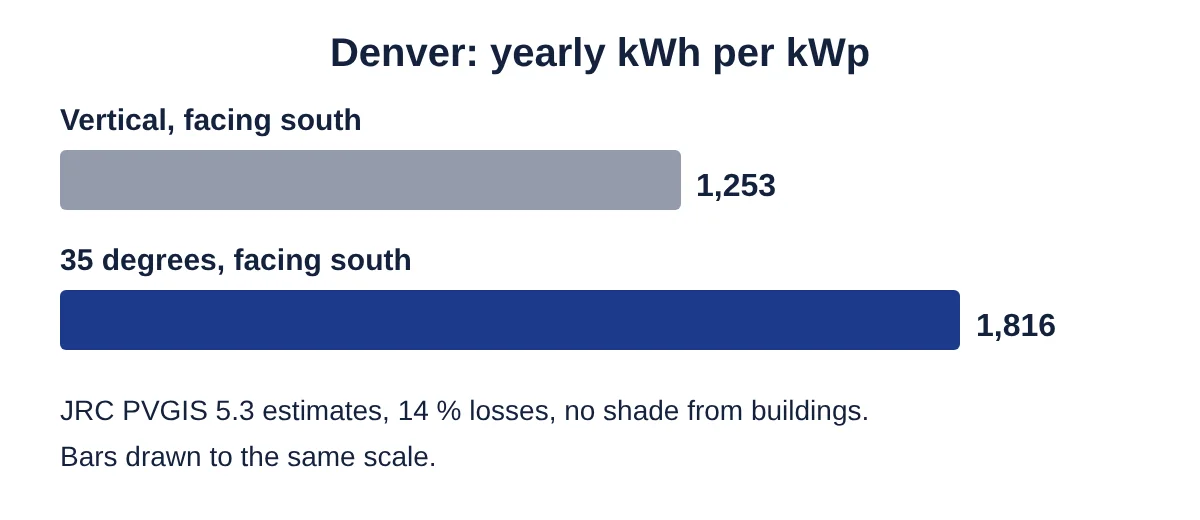
The PVGIS 5.3 model from the European Commission’s Joint Research Centre gives estimates of yearly output for US cities. The table below shows kWh per kWp for a vertical panel facing south, east and west, a 15-degree tilt and a 35-degree tilt.
| City | Vertical, south | Vertical, east | Vertical, west | 15° south | 35° south |
|---|---|---|---|---|---|
| Burlington, VT | 892 | 632 | 595 | 1,202 | 1,287 |
| Baltimore, MD | 933 | 693 | 607 | 1,316 | 1,399 |
| Denver, CO | 1,253 | 916 | 781 | 1,683 | 1,816 |
| Salt Lake City, UT | 1,211 | 863 | 853 | 1,695 | 1,809 |
| Los Angeles, CA | 1,066 | 858 | 852 | 1,714 | 1,780 |
These are estimates for 1 kWp with 14 % system losses and no shade from nearby buildings. For an 800 W kit, multiply by 0.8. In Denver, for example, a vertical south panel gives about 1,002 kWh a year, and a 35-degree south panel about 1,453 kWh.
A railing that faces east or west gives less than a south-facing one, and a panel with two sides can average its east and west values. The right choice depends on your balcony’s direction and the mount your building allows.
Common mistakes
- Choosing a mount before checking the lease or HOA rules.
- Assuming a clamp is rated for wind because it looks solid.
- Mounting a vertical panel on a railing and expecting the output of a tilted stand.
- Forgetting that a floor stand still needs a rated base.
What to buy
Before you buy, confirm these points:
- The mount is rated for the weight and wind load of your panel, in writing.
- The clamp or bracket fits your railing’s size and material.
- The lease or HOA allows the mount, and your landlord has agreed in writing where the lease requires it.
- The angle suits your balcony’s direction and your city’s table values.
To compare models, search Amazon and check each listing against this list:
Search on Amazon Search on AmazonFor the basics of kits and output, read what is balcony solar and how much electricity balcony solar produces. For installation and outlets, read how to install balcony solar safely. If you rent, see balcony solar for renters and HOAs and how to ask your landlord or HOA about plug-in solar.
Frequently asked questions
How do I mount a solar panel on a balcony railing?
Use a clamp or bracket that the maker rates for your railing's size and material. Follow its instructions, check every fixing, and get your landlord's permission in writing if you rent.
Can I mount a solar panel without drilling?
Some railing and floor mounts use clamps or a weighted base instead of screws. Check the rated load and your lease before you choose one, because a mount that does not drill can still need permission.
What angle should a balcony solar panel be?
In every US city in the PVGIS table, a 35-degree tilt facing south made more energy per year than a vertical panel facing south in every city. Compare the numbers for your city and the direction your balcony faces.
Is it safe to hang solar panels from a balcony?
Only with a mount rated for the panel's weight and wind load, fixed with the maker's hardware. If the seller does not publish those ratings, do not assume the mount is rated.
Do I need landlord permission for a balcony solar mount?
Check your lease. New Jersey's law, for example, requires a tenant to give the landlord written notice at least 14 days before placing or using a plug-in device. Vermont's law sets a 10-day notice period.