What Can 800W Plug-in Solar Power? How to Check Your Appliances
A plug-in kit powers what is switched on, up to 800 VA, and stores nothing. See which appliances suit it, how to read energy labels and what it cannot run.
Some links are affiliate links: if you buy through them we earn a small commission at no extra cost to you. It does not change our recommendations.
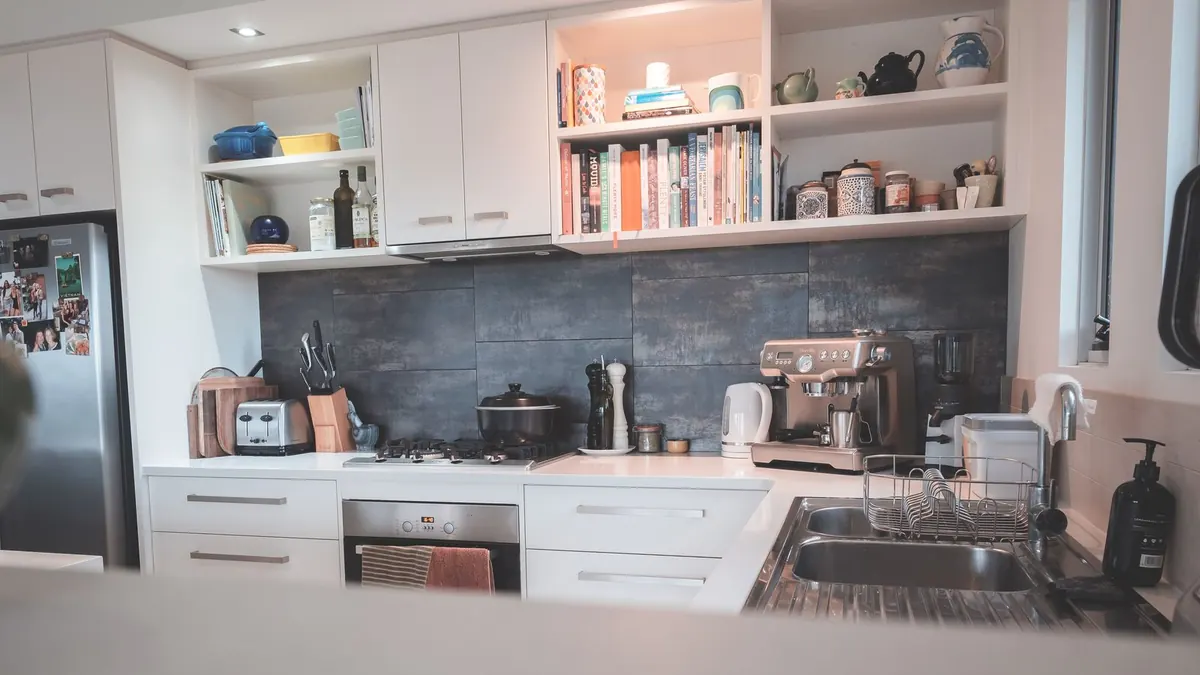
A plug-in solar kit feeds whatever is switched on in your home while the panels make power, up to 800 VA. It does not store energy. Steady loads that run all day, such as a fridge-freezer and a router, suit it best. Daytime use, such as a laptop or a washing machine, can run from it too. Cooking, heating and car charging draw far more than 800 VA, so a kit cannot run them.
How the power is used
A kit has no battery, and the rules do not allow one to be connected. Power goes to whatever is on at that moment. If nothing is on, the power is not used, and it is not stored for the evening.
That makes timing the key. A kit helps most when someone is at home using electricity in daylight. It helps least when the house is empty and only one small load is running.

Steady loads: the fridge-freezer and the router
The Energy Saving Trust says fridge-freezers run 24 hours a day, 365 days a year. A fridge-freezer draws from the kit whenever the sun is up and from the grid at night. A router and a small standby load behave the same way, and they are on all day, so they make steady use of the daylight output.
Daytime loads: laptop, washing machine, dishwasher
A laptop on a desk by a sunny window is a clear daytime load. A washing machine, dishwasher or tumble dryer uses far more power while it runs, but it runs for a set time. Start it in the middle of a sunny day, and more of the output goes to the appliance.
The Energy Saving Trust puts washing machines, dishwashers and tumble dryers together at about 14% of a typical energy bill, which makes them the largest group on that list. Fridges and freezers come next, at about 13%.
What 800 VA cannot run
Some loads are far above 800 VA, so a kit cannot run them, even alone:
- Ovens and hobs for cooking.
- Electric showers and immersion heaters.
- Kettles at full power, and two appliances of that size on at the same time.
- Electric car chargers.
If one of these is on, the rest of the load comes from the grid. The kit’s contribution stays at or below 800 VA.
How to read an appliance’s energy label
The energy label gives a figure you can use to estimate the average power of an appliance. Follow these steps.
- Find the label. It is on the appliance, in the manual, or on the product sheet.
- Read the annual energy use. Many labels show kWh per year. Some show kWh per cycle or per 100 cycles, so check the unit before you calculate.
- Convert to average watts. Multiply kWh per year by 1,000, then divide by 8,760, the number of hours in a year.
- Compare the total. Add up the appliances that will run at the same time, and keep the total below 800 VA with a margin.
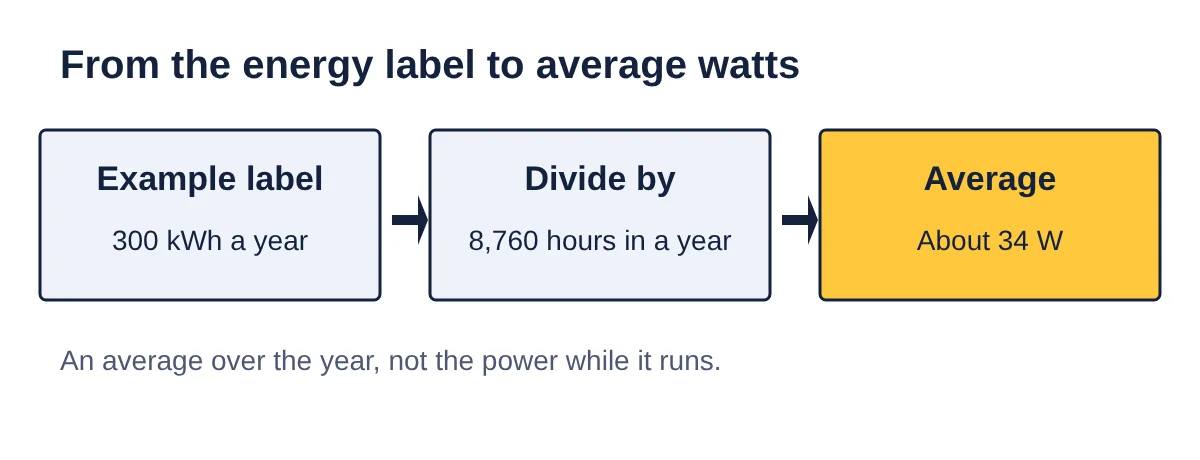
The result is an average over the year. An appliance draws its full power only while it runs, so a load that switches on for an hour and then off uses much less than its average figure suggests over the day.
Backup supply and power cuts
A kit has no battery, so it cannot keep appliances running when the grid supply is off. Do not count on it as a backup for a fridge, a freezer or medical equipment. For what happens in a cut, read does plug-in solar work in a power cut.
Matching the load to the kit
Start with the loads that run for long periods, such as the fridge-freezer and the router. Add the daytime loads you use while the sun is out, such as a laptop. Then list the loads you would run only occasionally. Keep the sum of the loads that can run at the same time under the 800 VA cap, with a margin, and remember that the cap is what reaches your home from the kit, not what your home uses.
Real-home examples
A flat with a balcony. A fridge-freezer, a router and a laptop on a desk by the window are the core of the day. The fridge and router run all day, and the laptop runs while you work. The washing machine is the one load to time for a sunny middle of the day.
A terraced house with a yard. The same fridge and router, and a home office in a back room. The fridge and the router are the loads a kit suits best. Electric heating or cooking is outside what a kit can cover.
A house with someone at home all day. More of the output is used, because the appliances are running in daylight. An empty house uses less of it, so a kit saves less.
Mistakes to avoid
- Adding up appliance labels without the unit. Check whether the label shows kWh per year or per cycle.
- Expecting the kit to cover cooking or heating. Those loads are far above 800 VA.
- Plugging a monitor or an adaptor between the kit and the socket. Do not do it. The rules do not allow it.
- Counting the saving from the appliance label alone. The saving depends on how much output you use at home. See how much plug-in solar panels save.
For the rules that apply before you buy, read the complete UK guide to plug-in solar. To see how much a kit makes in each month, read is plug-in solar worth it in winter. To measure what a kit adds, see how to monitor plug-in solar in the UK.
Frequently asked questions
Can plug-in solar run a fridge freezer?
A fridge-freezer runs all day, every day, so it suits a kit well. Check its energy label, and add it to the rest of what you run at the same time to stay within 800 VA.
Can I charge an electric car with plug-in solar?
No. Charging an electric car draws far more than 800 VA, so a plug-in kit cannot charge one.
Will plug-in solar power my whole house?
No. A kit supplies at most 800 VA, and the specification allows one plug-in device of up to 800 VA per household circuit.
Do I need to be at home for plug-in solar to help?
No. The kit feeds whatever is switched on while the sun shines. Power made while the house is empty is only used by appliances that are running, such as the fridge-freezer and router.
What happens to unused solar power?
It is not stored, because the rules do not allow a battery with these kits. Plug-in kits are not paid under the Smart Export Guarantee.
Can I use an energy monitor between the kit and the socket?
No. Do not plug a monitor, extension lead or adaptor between the kit and the socket. A clamp monitor at the consumer unit, fitted by an electrician, is the option to ask about.