Plug-in Solar and the Smart Export Guarantee: Can You Sell Surplus?
Plug-in solar kits normally cannot earn Smart Export Guarantee payments. Learn why, what some suppliers pay plug-in owners and what to check first.
Some links are affiliate links: if you buy through them we earn a small commission at no extra cost to you. It does not change our recommendations.
Usually not. The Smart Export Guarantee (SEG) is the scheme under which electricity suppliers pay for power that small generators send to the grid, and it requires certification that plug-in kits do not have. Some suppliers accept plug-in owners on their own export tariffs. MoneySavingExpert names British Gas and Octopus, so check your supplier’s current terms before you count on any payment.
What the Smart Export Guarantee is
The SEG is a scheme in which electricity suppliers pay for the power that small generators export. Eligibility depends on certification. The Energy Saving Trust says that without it, you cannot normally sell electricity under the SEG. MoneySavingExpert puts it more bluntly: technically, you should not get paid for plug-in electricity that leaves your home.
Why a plug-in kit usually does not qualify
Plug-in kits are not MCS certified. That is the reason the usual SEG payment normally does not apply to them. The Ofgem decision that created the plug-in category does not mention export arrangements or the SEG. So any export payment you receive comes from your supplier’s own terms, not from the scheme.
What some suppliers offer
MoneySavingExpert reports the following figures for plug-in owners. Tariffs change, so treat these as a snapshot and check the supplier’s terms.
| Supplier | Existing customers | New customers |
|---|---|---|
| Octopus | Up to 12p per unit exported | 4.1p per unit exported |
| British Gas | Up to 12p per unit exported | 3.1p per unit exported |
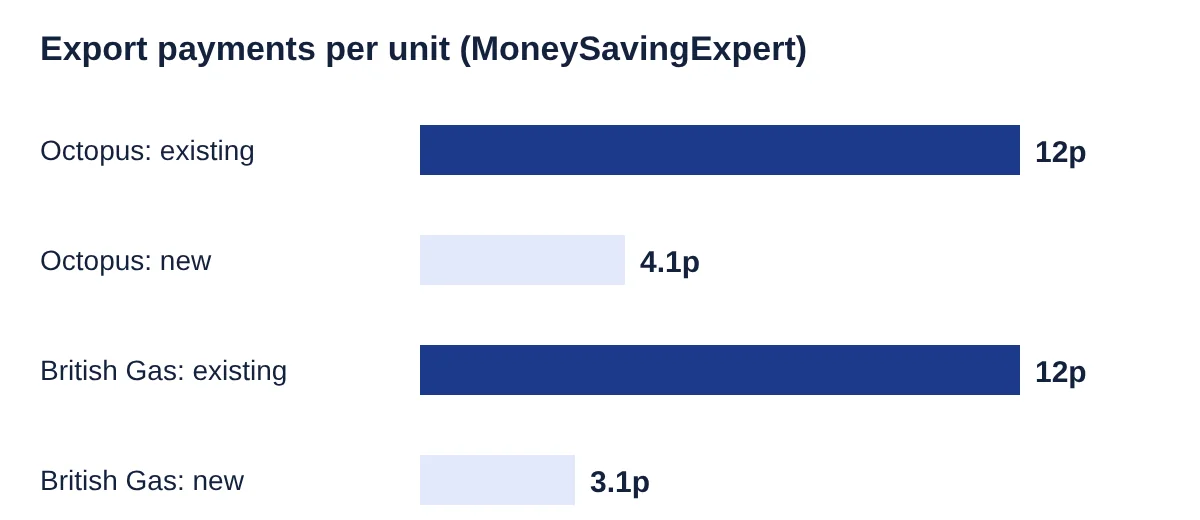
Note the gap between existing and new customers. If you switch supplier only to chase an export rate, check the whole tariff first, including the price you pay for the electricity you buy.
Why exporting matters less than using your power
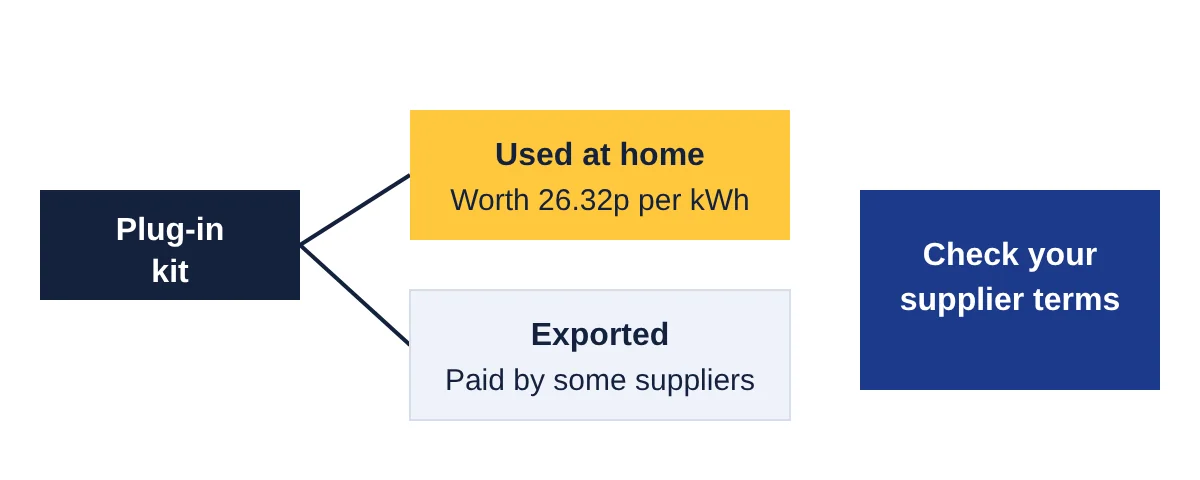
Every kWh you use at home is worth the unit rate you would otherwise pay. Under the Ofgem price cap for October to December 2026, that is 26.32p per kWh. Exporting is worth far less, and often nothing. For the household saving, the sensible aim is to match your use to the hours when the panels are making power. Our savings guide shows how to work out your own figure.
Could this change?
The specification is an interim document and says it may be modified or superseded. The Ofgem decision does not mention export. Export payments for plug-in owners come from each supplier’s tariff, and those tariffs can change. Until your supplier confirms a tariff in writing, treat export income as a bonus, not a planned saving.
How to check what your supplier pays
If you want to know whether any export payment is worth having, ask your supplier directly and get the answers in writing:
- Ask whether it accepts plug-in solar on an export tariff, and under which tariff.
- Ask for the rate per unit, and whether it differs for existing and new customers.
- Ask how exported electricity is measured and paid, and whether the rate is fixed or can change.
- Compare the export rate with the price you pay for the electricity you buy, because a higher export rate can still lose money on a tariff with high unit prices.
Keep the answers with your paperwork. Our rooftop comparison explains how export payments differ between the two types of system, and our DNO guide covers the notification you must make whatever you earn.
Common mistakes
- Assuming a plug-in kit is paid in the same way as a certified rooftop system.
- Choosing a supplier for its export rate and ignoring the price of the electricity you buy.
- Quoting an old export figure without checking the current tariff.
- Ignoring the 26.32p unit rate, which is worth more than any export payment.
- Relying on a payment that the supplier has not put in writing.
For the rules that apply to the kit itself, read our guide to whether plug-in solar is legal in the UK.
Frequently asked questions
Can I get paid for exporting plug-in solar?
Normally not under the Smart Export Guarantee. Some suppliers accept plug-in owners on their own export tariffs, so the answer depends on your supplier and its current terms.
Is the Smart Export Guarantee available for plug-in solar?
Not normally. The Energy Saving Trust says that without the certification the scheme requires, you cannot normally sell electricity under it. Plug-in kits do not have that certification.
Which suppliers pay for plug-in solar exports?
MoneySavingExpert reports that British Gas and Octopus accept plug-in owners on their SEG tariffs. It quotes up to 12p per unit for existing customers, and 4.1p with Octopus or 3.1p with British Gas for new customers. Check the supplier's own terms before you switch.
Is it better to use the power or export it?
Use it at home. Each kWh you use replaces grid power at the unit rate, which is 26.32p under the Ofgem cap for October to December 2026. A plug-in kit normally earns little or nothing for exports.
Could export payments change?
The Ofgem decision does not mention export arrangements, and the specification is an interim document that may be changed. Check your supplier's terms before you count on any payment.