Planning Permission for Plug-in Solar Panels: England, Scotland, Wales
England now allows plug-in solar under set limits. See the wall, roof and timber limits, the protected-building rules and what applies in Scotland and Wales.
Some links are affiliate links: if you buy through them we earn a small commission at no extra cost to you. It does not change our recommendations.
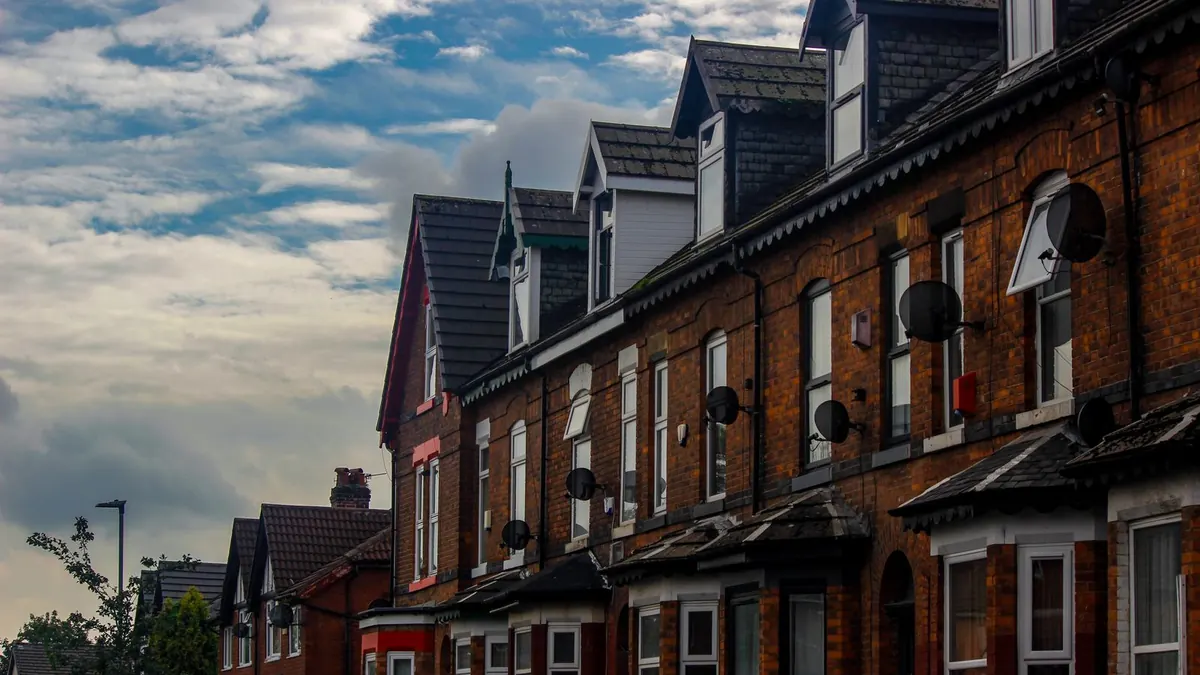
In England, plug-in solar can now be fitted under permitted development from 27 August 2026, within set limits. The main limits are 40 cm out from a wall, 20 cm where the home is right beside a highway, and no timber. Protected buildings have extra controls. Scotland and Wales plan their own rules, so the England limits do not apply there, and you should check with your council before you fix anything.
The limits for England
The Order sets the limits below. They are measured from the outside of the wall or roof.
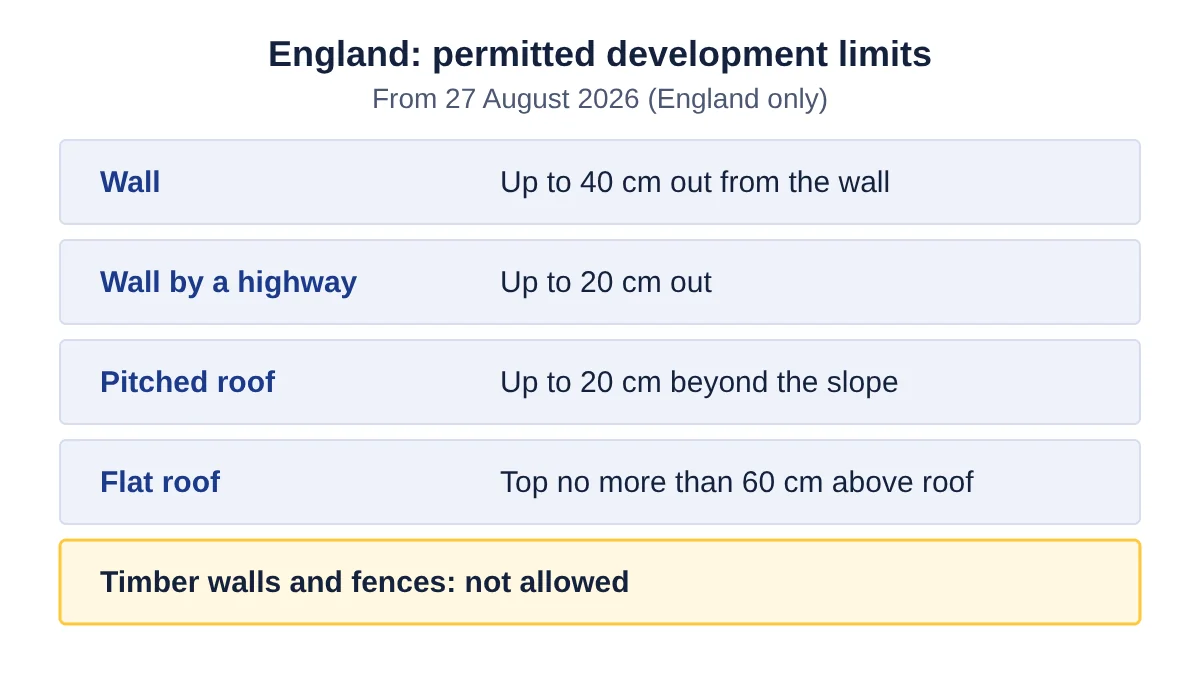
- Wall: equipment on a house wall should not project more than 40 cm, measured at right angles to the outside of the wall.
- Wall beside a highway: where the home is right beside a highway, the stricter 20 cm limit applies.
- Pitched roof: panels must not project more than 20 cm beyond the roof slope, measured at right angles to it, and must not sit higher than the highest part of the roof.
- Balcony or roof terrace enclosure: the same 40 cm limit applies to equipment on a balcony enclosure or roof enclosure, or 20 cm where it is beside a highway.
- Flat roof: the highest part of the system must not sit more than 60 cm above the highest part of the roof. Chimneys are excluded from this measure.
The Order is the authoritative text. Measure your own wall and roof against these figures before you buy a mounting system.
Timber is not allowed
The Order does not allow plug-in solar on a wall, balcony or enclosure made of timber, or on any part of the outside of the home or block that is clad in timber. Planning Portal’s guidance adds wooden fences, gates and similar structures to that list. The stated reason is fire risk. The same ban appears in the product specification, which excludes timber balconies and timber cladding. If your fixing point is timber, choose another one or do not install.
Flats and blocks of flats
The Order sets separate limits for houses and for blocks of flats. Read the flat provisions in the Order for the rules that apply to your building. If you live in a flat, read our guide to plug-in solar for renters and leaseholders as well, because the lease usually matters as much as the planning rules.
Conservation areas, World Heritage Sites and listed buildings
Protected buildings have extra restrictions:
- Listed buildings: restrictions apply to the building, to buildings within its curtilage, and to scheduled monuments.
- Conservation areas and World Heritage Sites: additional controls apply.
- Walls beside a highway in these areas: TechRadar reports that a panel on one of these walls needs planning permission.
Check with your council before you fit anything to a listed building or to a building in a conservation area.
Scotland, Wales and Northern Ireland
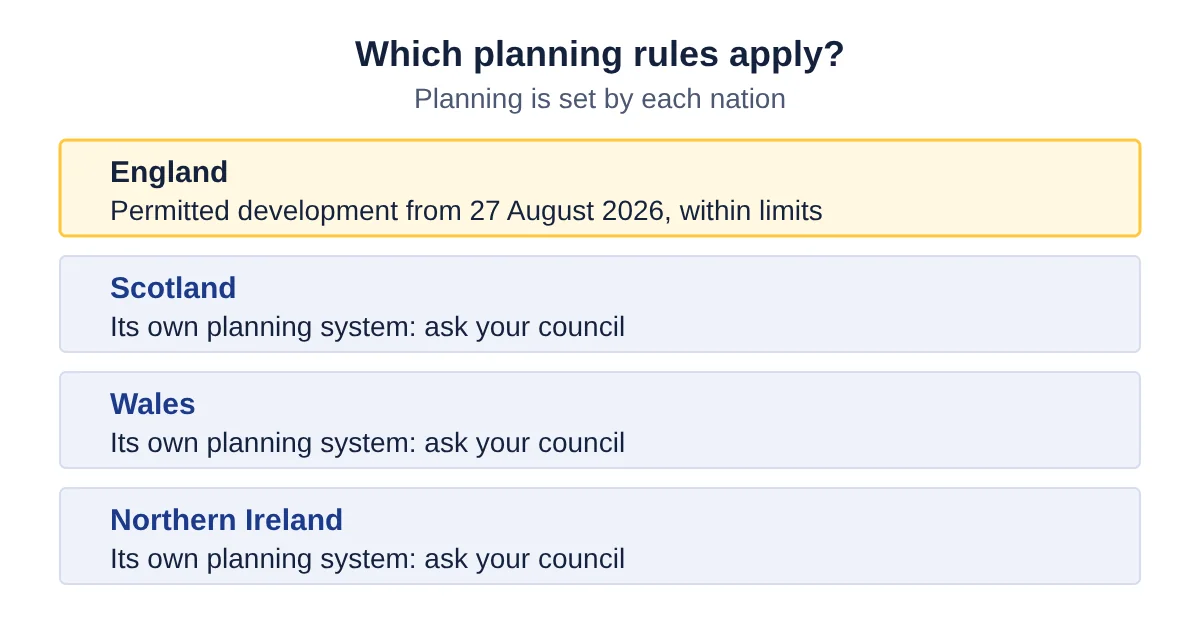
Planning is devolved in the UK, so the England Order does not apply in Scotland, Wales or Northern Ireland. Each nation sets its own rules. Contact your local council before you install, and ask them for the current position in writing. If your council gives a view, keep a copy with your records.
Planning, building rules and your lease
Planning permission is one of three checks, not the only one:
- Planning: whether the panel is within permitted development, or needs permission from the council.
- The product rules: whether the kit meets the DESNZ specification and is on the ENA Type Test Register.
- Your lease or tenancy: whether you may fix anything to the building at all.
A panel can meet one of these and fail another. Our guide to whether plug-in solar is legal in the UK sets out the product rules in full.
Before you fit a panel
- Measure the distance from the outside of the wall or roof to the furthest point of the panel.
- Check whether the home is right beside a highway.
- Confirm there is no timber on the fixing point.
- Check whether the building is listed or in a conservation area.
- If a limit is close, ask the council for a view in writing before you buy.
- Notify your network operator after installation. See our guide to registering plug-in solar with your DNO.
Frequently asked questions
Do I need planning permission for plug-in solar?
In England, plug-in solar can fall under permitted development from 27 August 2026, within set limits. Outside those limits, or on a protected building, you may need permission from your council.
Can I put plug-in solar on a wooden fence?
No. In England, the Order rules out timber walls, balconies, enclosures and timber-clad surfaces, and Planning Portal's guidance also excludes wooden fences, gates and similar structures.
Do I need planning permission in a conservation area?
Possibly. Conservation areas have extra controls, so check with your council before you fit a panel on the outside of a building.
Do I need planning permission in Scotland or Wales?
Planning is devolved, so the England rules do not apply there. Ask your local council before you fix anything to a building.
Can I put plug-in solar on a flat roof?
In England, the highest part of the system may sit no more than 60 cm above the roof. Check the other limits before you fit one.
Can a listed building have plug-in solar?
Listed buildings have restrictions, so ask the council before you fit anything to one.
Sources
- legislation.gov.uk – The Town and Country Planning (General Permitted Development) (England) (Amendment) Order 2026 (SI 2026/896)
- Planning Portal – Changes to permitted development rules for domestic solar installations (28 August 2026)
- Planning & Design – Permitted development rights for solar get a major update in England
- TechRadar – 3 places you can’t install plug-in solar panels
- DESNZ – Plug-in Solar Device Interim Product Specification v2.0 (July 2026)