Outdoor Socket for Plug-in Solar: IP Rating and Fitting Rules
Plug-in solar needs an outdoor socket rated at least IP55. The fire service advises IP65. Learn the ratings, the extension lead ban and fitting costs.
Some links are affiliate links: if you buy through them we earn a small commission at no extra cost to you. It does not change our recommendations.
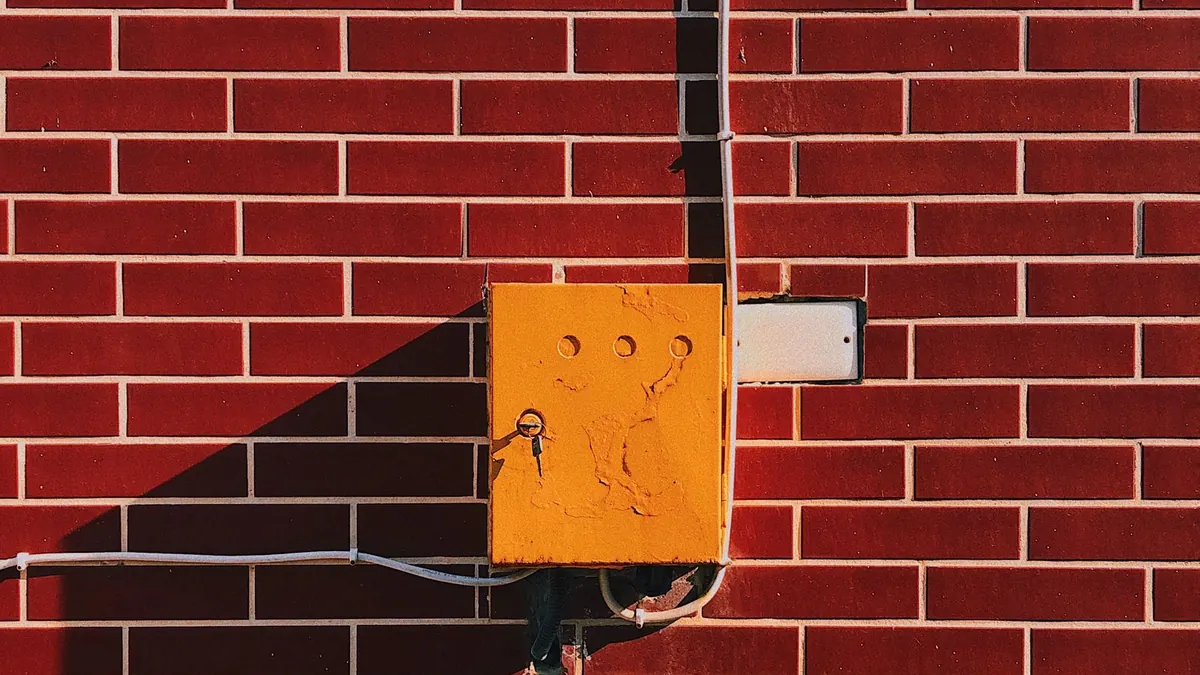
A plug-in solar kit used outdoors must plug into an outdoor socket rated at least IP55, according to the DESNZ interim specification. The London Fire Brigade advises at least IP65, fitted by a competent person. Extension leads and adaptors are not allowed. Fitting a new outdoor socket is work for a professional electrician, and Checkatrade puts the cost at £140 to £260.
Why you need a proper outdoor socket
A socket that is not made for outdoor use lets water in. The London Fire Brigade warns that unsuitable or non-weatherproof sockets may allow water to get in, and that is the risk the IP rating is there to control. Garden walls, balconies and fences all expose a socket to rain, so the rating matters wherever the kit sits outside.
IP ratings explained
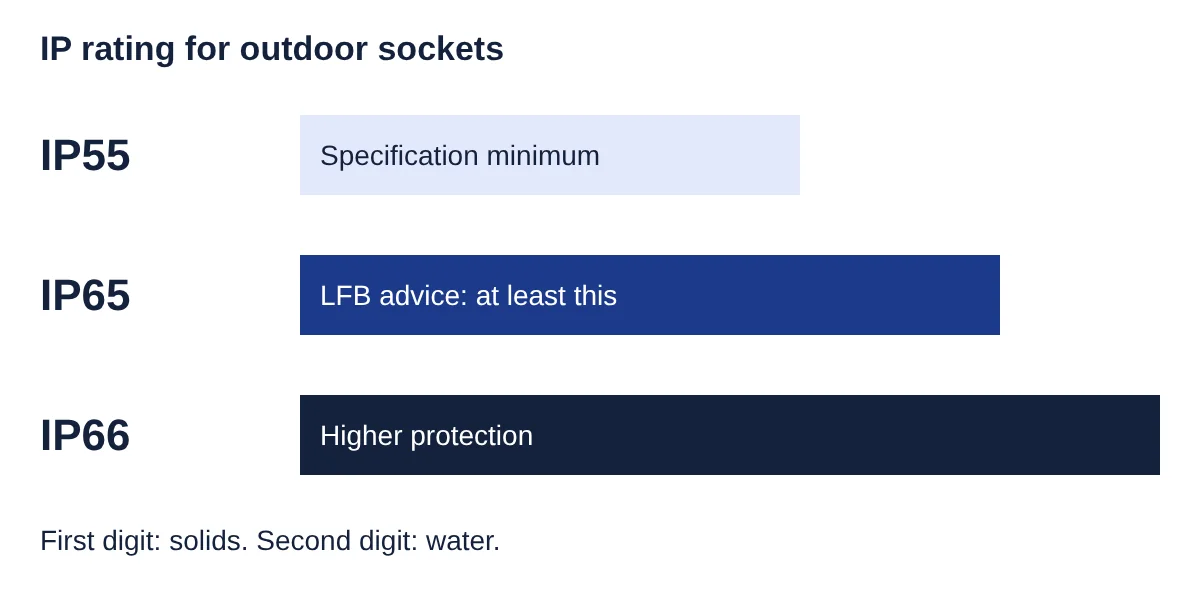
An IP rating has two digits. The first covers protection against solid objects such as dust. The second covers protection against water.
| Rating | First digit (solids) | Second digit (water) | Where it fits here |
|---|---|---|---|
| IP55 | 5: dust protected | 5: water jets | The specification minimum outdoors |
| IP65 | 6: dust tight | 5: water jets | The London Fire Brigade’s advice |
| IP66 | 6: dust tight | 6: powerful water jets | Higher protection again |
What the specification requires
The specification says that outdoor plugs and socket-outlets must have a degree of protection of at least IP55. A socket for externally mounted use should be IP55 or better. It also says the device must not be connected to damaged, degraded or non-compliant sockets. Those three points should guide what you buy and what an electrician checks.
Why extension leads and adaptors are banned
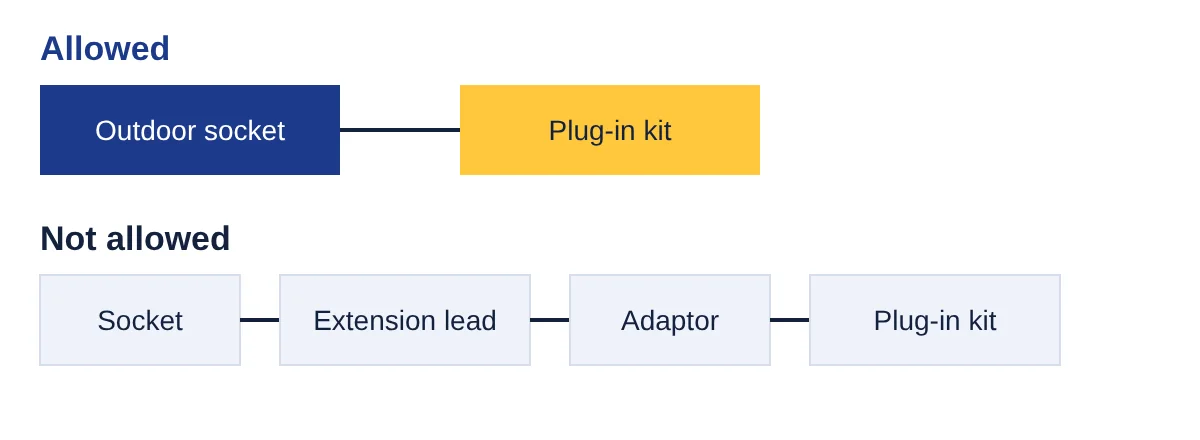
The specification does not permit multi-way adaptors, travel adaptors, RCD adaptors or plug converters. It also says the instructions must state that extension cables are not permitted, and that only connection cables specified or approved by the manufacturer may be used. The London Fire Brigade adds that plug-in solar should not be connected through extension leads, adaptors or overloaded sockets.
The rule is simple. The kit must plug straight into a suitable socket on a suitable circuit. Each extra connection in the chain is one more thing that can fail.
Fitting: what an electrician does and what it costs
Testing and modifications to an installation are for professional electricians, according to the specification. A new outdoor socket means new fixed wiring and a suitable protected circuit, so it counts as a modification. An electrician will check which circuit the socket belongs to, confirm the protection is modern, and make sure the socket is weatherproof and fitted correctly. Checkatrade puts that work at £140 to £260, according to MoneySavingExpert, and MoneySavingExpert notes that this adds to the payback time.
If an outdoor socket is not practical, ask an electrician what options your home has. Running cable through a wall or window is electrical work too, and it is not a DIY job.
What to look for when buying
- A socket marked IP55 or better. IP65 matches the London Fire Brigade’s advice.
- A weatherproof cover that suits the socket type.
- The cable that the kit’s manufacturer specifies, not a general-purpose extension.
- The exact kit model on the ENA Type Test Register. See our kit check guide.
Browse weatherproof sockets rated IP65 on Amazon: Search on Amazon
Common mistakes
- Using an extension lead, adaptor or overloaded socket.
- Plugging an outdoor kit into an indoor socket that is not rated for outdoor use.
- Choosing a socket rated below IP55.
- Fitting the socket yourself.
- Leaving the kit’s connection exposed to rain because the cover is missing.
For the electrical checks before any socket work, read our guide to EICR and consumer units. For where the kit can sit, see our mounting guide.
Frequently asked questions
What IP rating does plug-in solar need outdoors?
The DESNZ specification sets a minimum of IP55 for outdoor plugs and sockets. The London Fire Brigade advises at least IP65, fitted by a competent person.
Can I use an extension lead for plug-in solar?
No. The specification does not permit extension cables, multi-way adaptors, RCD adaptors, travel adaptors or plug converters. The London Fire Brigade also advises against extension leads and overloaded sockets.
Can I fit an outdoor socket myself?
The specification says testing and modifications to the installation are for professional electricians. Have a competent person fit the socket.
How much does an outdoor socket cost?
Checkatrade puts the cost at £140 to £260, according to MoneySavingExpert. The price depends on the work needed to run the cable and fit the socket.
Can I use a normal indoor socket for the kit?
Only for parts that stay indoors. The outdoor parts need at least IP55, and an indoor socket is not rated for outdoor use. The kit's cable must also be the one the manufacturer specifies.