Plug-in Solar Tripping the RCD: Why It Happens and What to Do
A plug-in solar kit can trip your RCD if its DC leakage reaches an older Type AC device. Learn why, the RCD types and when to call an electrician.
Some links are affiliate links: if you buy through them we earn a small commission at no extra cost to you. It does not change our recommendations.
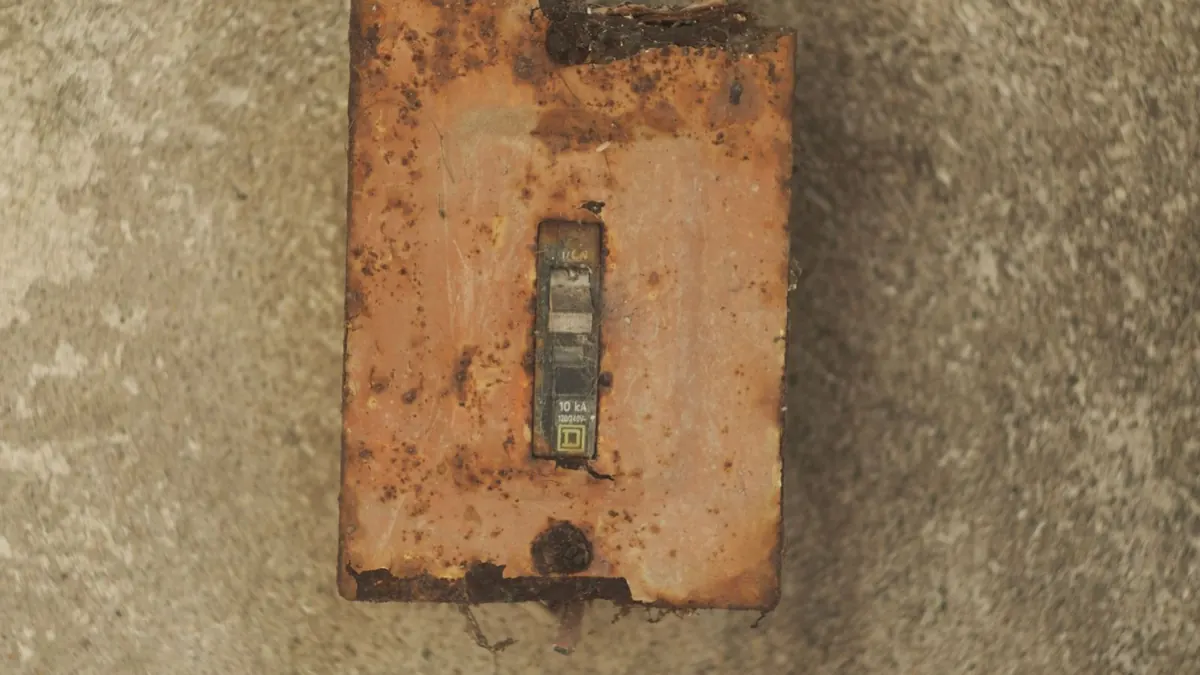
A plug-in solar kit can trip the RCD in your consumer unit when it leaks direct current (DC) into the household AC circuit. Older RCDs, known as Type AC, are not designed to work with that kind of residual DC current. The safe response is the same every time: unplug the kit, stop using it, and ask a registered electrician to find the cause.
Why a plug-in kit can trip an RCD
A plug-in kit has a panel and an inverter. The inverter turns the panel’s DC output into AC and feeds it into a socket. Electrical Safety First explains that Type AC RCDs, which are common in older installations, are not designed to operate in the presence of residual DC current. A kit that leaks DC into the circuit can therefore cause an RCD to trip, or make it less reliable.
The specification also covers this. It says that products that leak DC current into an AC circuit can desensitise protective devices.
Type AC, A and B: what your consumer unit may have
RCDs come in types that detect different kinds of fault current. The type matters because a Type AC device detects only alternating current. Type A also detects pulsating DC, and Type B also detects smooth DC.
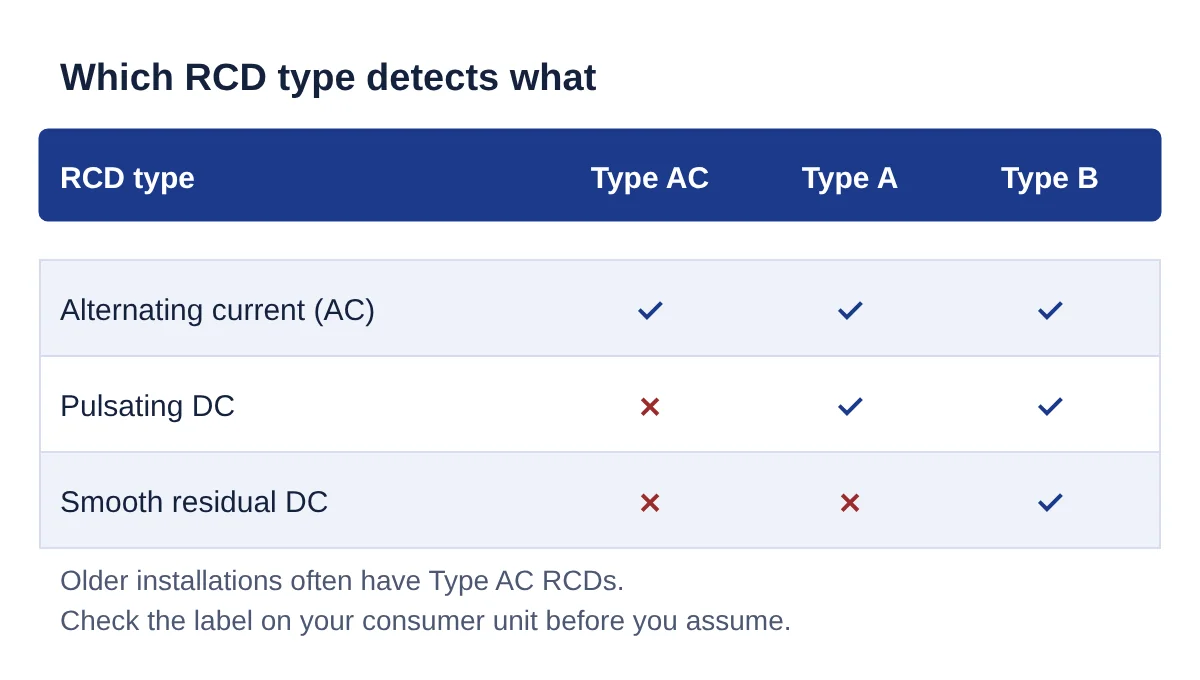
Many older consumer units have Type AC RCDs. The type is usually printed on the device, so look at the label, but do not change it yourself. Replacing an RCD or consumer unit is electrical work for a qualified electrician.
EV chargers and other DC-leaking products
Plug-in solar is not the only issue on a circuit. The specification lists plug-in EV chargers, IT equipment, power supplies and plug-in solar systems among products that can leak DC current into an AC circuit. If an EV charger is plugged in on the same circuit as your kit, tell the electrician before you rely on either device.
Do not assume that an RCD which has tripped once will behave normally again. An electrician can check whether the circuit, the RCD and the load are compatible.
Stop, unplug and call
If the RCD trips, follow these steps in order:
- Unplug the kit from the socket.
- Do not keep resetting the RCD. Repeated tripping is itself a warning sign.
- Note what happened: whether the trip came in sunshine, when you plugged something in, and whether anything else was running.
- Call a registered electrician and tell them about the plug-in kit.
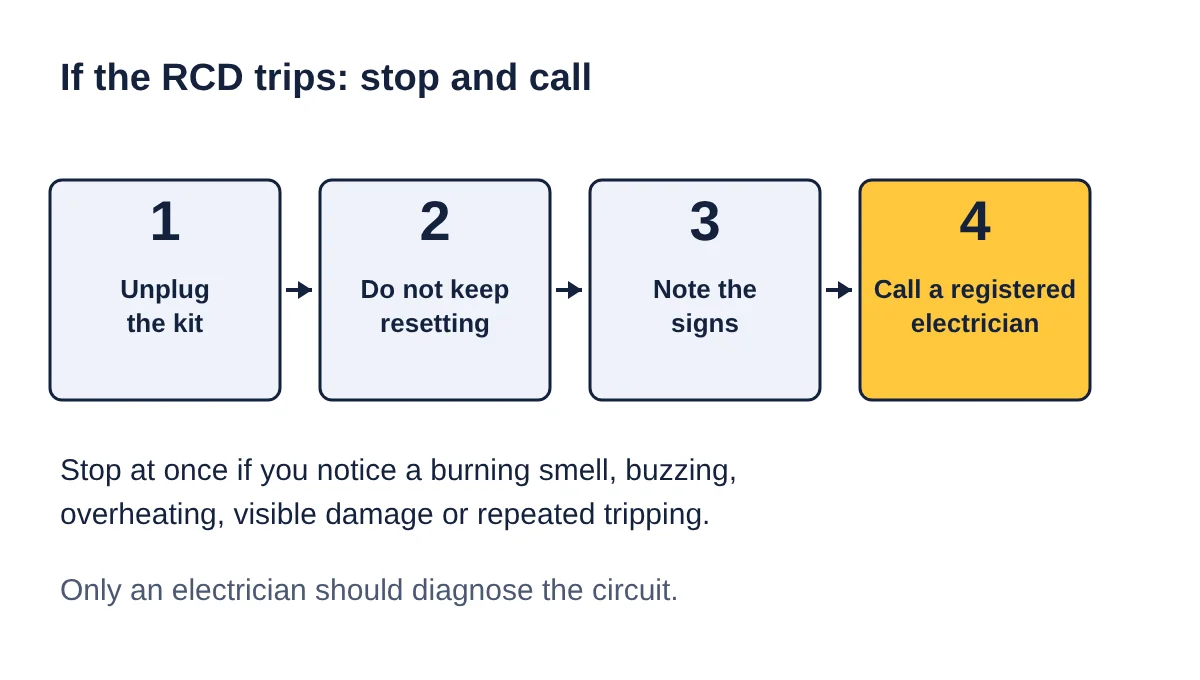
The London Fire Brigade advises stopping the system immediately if you notice a burning smell, overheating, buzzing noises, visible damage or repeated electrical tripping.
What an electrician will check
Electrical Safety First says that installations like this should be inspected by a skilled and qualified electrician who is registered with an electrical competent person scheme. In practice, the electrician will look at:
- the type and condition of the RCD and the consumer unit;
- whether the socket circuit is the one the kit is plugged into, and whether other equipment shares it;
- whether the kit is the only plug-in product on that household circuit;
- whether the wiring and protection are in good condition.
For more on inspection and consumer units, read our guide to whether you need an EICR or a new consumer unit.
Keep the kit on a socket circuit
The specification allows plug-in devices only on socket circuits. It also says that a plug-in device must not be connected to a battery energy storage system, and that a maximum of one inverter of up to 800 VA may be plugged in per household circuit. These limits matter when you plan where a kit can go.
Check that your kit is on the register before you use it. Our guide to checking a plug-in solar kit explains how to read an entry.
Common mistakes
- Resetting the RCD again and again. Each trip is a warning. Find the cause before using the kit again.
- Assuming a certified kit cannot trip an RCD. Compliance with the product rules does not decide how your existing circuit responds.
- Adding a second device to the same circuit. Check the household circuit limit before you plug anything else in.
- Fitting a new RCD yourself. Protection changes are for a qualified electrician.
For general safety questions, see our guide to whether plug-in solar panels are safe in the UK. If you are planning a full installation, our step-by-step guide to plug-in solar installation explains what the process involves.
Frequently asked questions
Why does my plug-in solar trip the RCD?
Most often because the kit leaks direct current into the household AC circuit and the RCD cannot handle it. Type AC RCDs, common in older installations, are not designed to work with residual DC current. Stop using the kit and call a registered electrician.
Can I have plug-in solar and an EV charger?
Only with an electrician checking the whole circuit first. The Interim Product Specification lists plug-in EV chargers among products that can leak DC current into an AC circuit, and says that this can desensitise an RCD.
What RCD type do I need for plug-in solar?
You cannot choose this from the kit. Your electrician reads the device type on your consumer unit and decides whether it is suitable or needs replacing. Do not swap it yourself.
Who should I call if the RCD keeps tripping?
A registered electrician, who can test the circuit and the consumer unit. Ask whether they are registered with an electrical competent person scheme before you book.
Is it safe to keep resetting the trip?
No. Repeated tripping is one of the warning signs the London Fire Brigade lists. Unplug the kit, do not keep resetting the RCD, and get an electrician to find the cause.